




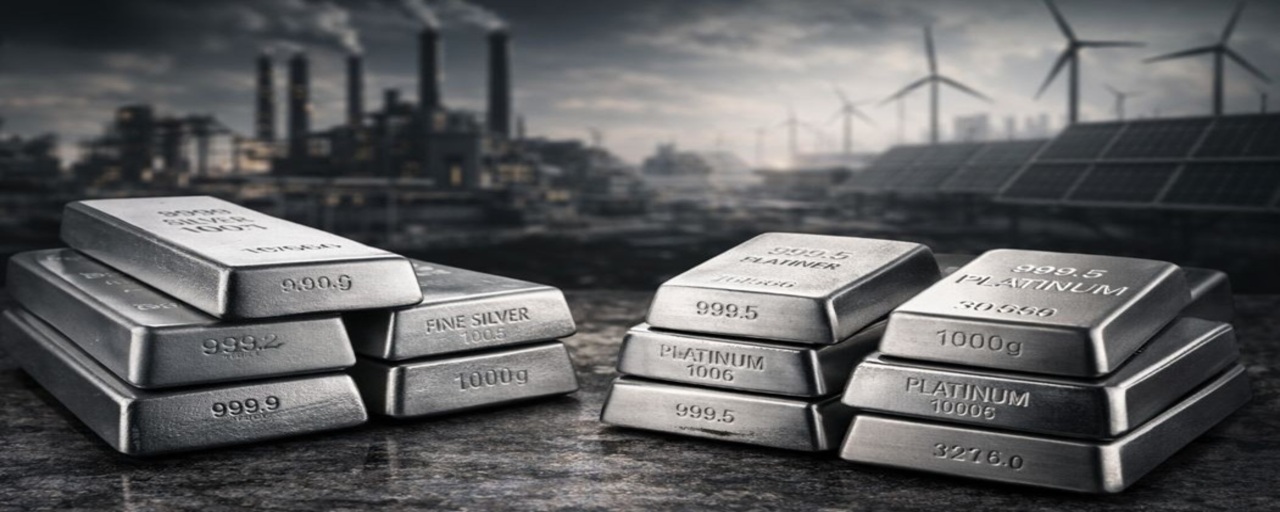
Platinum and silver are frequently competing for attention when investing in precious metals, but the reasons differ significantly. The two metals are both used as cushions against inflation and economic uncertainties, but their pricing mechanisms, demand forces, and availability differ substantially. The question of whether you use platinum or silver is not a one-size-fits-all answer, but is dependent on your investment objectives, tolerance to risk, and investment horizon.
In this guide, the main differences are separated so you can decide which metal better fits your strategy.
Understanding Platinum and Silver as Investment Assets
Platinum and silver are precious metals, but they play different roles in the international market.
- Platinum is more uncommon, mined in fewer places, and intertwined even more with industrial and automotive purposes.
- Silver is less expensive, more plentiful, and it has been utilized more in personal investment as well as industrial production.
Such differences influence their price changes, liquidity, and long-term investment prospects.
Consideration of prices and value.
Price is one of the initial aspects that investors are sensitive to.
Platinum
- Normally fetches more per ounce because it is in short supply.
- Prices may also be hectic due to the concentration of supply chains.
- It can go below gold when the demand is low.
Silver
- Much cheaper for the new and small-scale investors.
- Although it is much easier to accumulate in bulk.
- Usually, has unstable price changes when the economy is uncertain.
Platinum is a rare metal, which can lead to price spikes, but silver has a lower entry point; it is possible to employ slower, more gradual investing methods.
Industrial Demand and Market Drivers.
The industrial application contributes significantly to the long-term value of both metals.
Platinum: Industry-Based Demand.
Platinum is essential in:
- Automotive catalytic converters.
- Petroleum refining
- Chemical processing
- Hydrogen fuel cell technology.
Due to the fact that a large part of its demand is industry-based, prices of platinum are prone to fluctuations in output and to industry rules and regulations.
Silver: Technology and Energy Development.
Silver is widely used in:
- Boards and electronic materials.
- Solar cells and photovoltaics.
- Batteries and power storage.
- Medical and antibacterial purposes.
Due to the increased use of renewable energy, the industrial demand for silver is anticipated to be high.
Liquidity and Convenience of Trading.
An important consideration in investing in metals is their liquidity.
The silver market is among the most liquid in the world.
Buyers and sellers are readily available on bars, coins, and ETFs.
Smaller markets, such as platinum markets, may have a larger bid-ask spread.
The ease of entry and exit of the position makes silver easier, and platinum promises a lot of patience during buying and selling.
Storage and Ownership Costs
Physical possession has logistical implications.
- Both of the metals need secureStorage.
- Higher holdings may have insurance charges.
- The platinum value per ounce is high, and this implies that less space is needed.
- Silver has the potential to boost storage over time.
These expenditures must be included in long-term investment planning.
Long Term Perspective: Platinum vs Silver.
It is hard to predict future performance, but current trends give us insight.
The Future of Silver
The outlook of Silver is closely connected with:
- Renewable energy expansion
- Increase in electronics production.
- Greater electrification of the world.
That is why its industrial and investment metals are two-fold, which helps sustain its demand.
The Future of Platinum
The future of platinum can be reliant on:
- Automobile industry transformations.
- Hydrogen fuel adoption
- Ecological policies towards cleaner technologies.
As stated by CME Group, the platinum demand may increase considerably when the implementation of fuel-cell vehicles is faster.
Platinum vs. Silver in Jewelry and in Collectability.
Another area of investment is jewelry and design appeal.
The platinum jewels are durable, prestigious, and non-allergenic.
Silver jewelry is cheaper, more versatile, and more accessible.
From a bullion perspective:
Silver has a larger variety of designs and collectibles.
Platinum bullion options are scarcer and usually sold at a high price.
Silver tends to be attractive to collectors, and platinum to the long-term value enricher.
Which Metal Is Right for You?
There is no universal solution–just the one that is possible in terms of your goals.
Silver may be better if you:
- Want a lower entry price
- Prefer high liquidity
- Plan incremental or regular investments.
Platinum may suit you if you:
- Also capable of surviving price changes.
- Require an impact on industrial growth.
- Concerned with scarcity value in the long term.
Investing in both metals can expose a person to various economic drivers and eliminate risk in order to get a balanced portfolio.
Final Thoughts
Platinum and silver each offer benefits to an investment portfolio. Silver is more accessible, fluid, and has a wide array of industrial applications, whereas Platinum is rare and has a niche demand. Always check your financial objectives, the market conditions, and your storage facilities before investing, and when you are not sure, hire a qualified financial consultant to make sure that your strategy is in tandem with the long-term goals.