




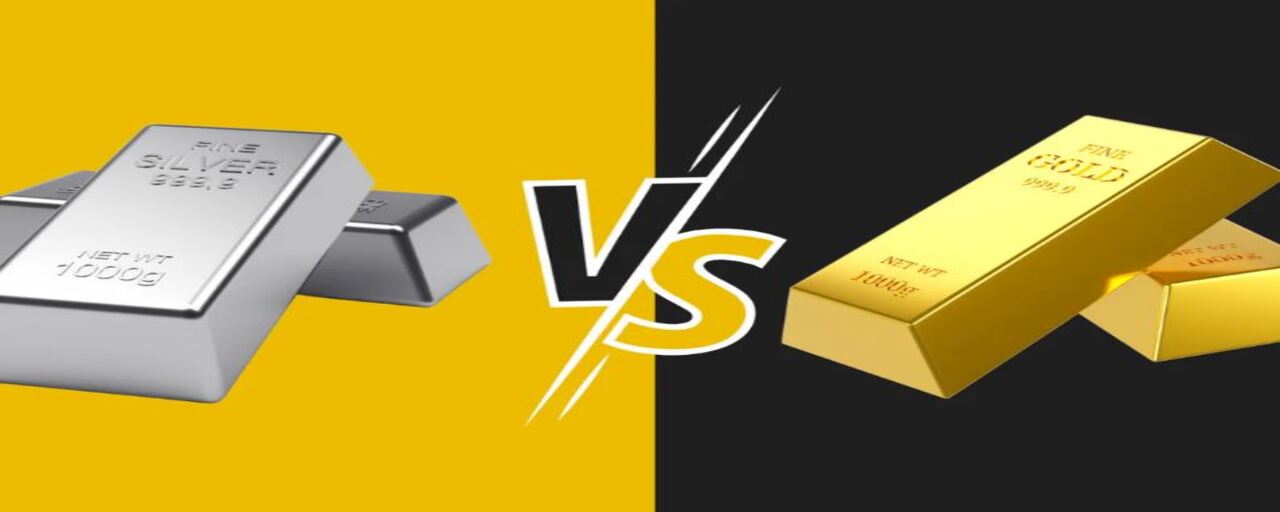
Investors have been turning to gold and silver for centuries to grow and protect their wealth. They can both act as a haven in times of economic uncertainty, and also as an inflation hedge. Gold and silver, while often mentioned together, are very different investments. It is important to understand their differences in order to decide which of the two assets should be included in your portfolio.
The guide below will help you understand the differences between silver and gold, how to invest, and which metal is best for your goals. Knowing these differences is the first step to making an informed investment, whether you’re new to precious metals investing or want to improve your current strategy.
The Differences Between Gold and Silver
1. The Economic Sensitivity of Industrial Demand
The primary use of gold and silver is the biggest difference between them. The primary uses of each metal has a major impact on how they react to changes in the economy.
Silver is a metal that has industrial applications. Over half of the global demand for silver comes from technology and manufacturing. Silver is used in many everyday products, such as smartphones, tablets and solar panels. It can also be found in electrical systems for cars. Silver’s price tends to fluctuate with global economic conditions because of its strong connection to the industry. Silver’s price can rise when the economy is booming, and there are strong manufacturing industries. In contrast, when an economy slows down, the industrial demand falls, which can put downward pressure on prices.
The industrial uses of gold are far less numerous. Gold’s primary value comes from its role as a wealth store, jewelry and purchases by central banks. Gold is therefore less susceptible to the economic cycle. Gold often does well in economic downturns, as investors seek it out to protect their capital during a time when other assets and stocks are declining.
2. Price Volatility
Silver is more volatile than gold when it comes to swings in price. Silver’s market is much smaller and more liquid than gold, so smaller money movements can make a big difference in its price. Silver’s volatility is two to three time greater than that of gold on any particular day.
This high volatility offers some traders the opportunity to make significant profits in the short term. The sharp movements in price are what they thrive off. Silver’s volatility is a challenge for long-term investors who are focused on risk management and stability. Silver’s unpredictable price fluctuations can make it more risky than gold, which is known for its relative stability.
The larger and more liquid gold market smooths out price fluctuations. Gold’s price is not immune from fluctuations but it tends to have a more stable value, a feature that many investors find appealing when trying to lower their overall portfolio risks.
3. Power as a Portfolio Diversifier
Smart investing is built on the principle of diversification. Spreading your investment across multiple asset classes can reduce the risk. Diversification can be achieved by investing in both gold and silver, although gold historically has been more effective.
The correlation between gold and stocks or bonds is consistently negative. When the stock exchange goes down, gold’s price often rises or maintains its value. Due to this inverse relationship, gold is a great hedge for market declines. It helps stabilize your portfolio during times of underperformance. The limited industrial uses of this metal insulate it from economic factors which typically influence the stock market.
Due to its industrial character, silver also offers some diversification advantages. Its performance being tied to the economic growth may not offer as much protection during a market crash or recession. It can help diversify your portfolio but it does not have the same status as gold.
4. Prices and Accessibility
The price is probably the biggest difference. Silver is much cheaper than gold ounce for ounce. Gold-to-silver, or the ratio of how many ounces it takes of silver to purchase one ounce gold, is often well over 50:1 and even higher.
Silver is now more affordable for investors looking to purchase physical precious metals. Silver is a valuable metal that can be purchased without requiring the large capital needed to purchase even one ounce of Gold. The precious metals markets are accessible to investors of any size.
Gold’s price is high, but it contributes to the fact that gold is a top-notch store of wealth. This is an efficient and compact way to store a lot of value. Investors with large capital will find it more convenient to store $50,000 of gold than the same amount in silver.
Ways to Invest in Gold and Silver
The next step after understanding the difference is knowing how to add these metals into your portfolio. There are many popular ways to invest in silver and gold.
- Physical metals: Gold and silver can be purchased in coins or bars. You will then be the owner of that asset. You must also consider storage costs and insurance. A premium may be added to the spot price of metals in order to cover production and distribution.
- Exchange Traded Funds: The ETF has become an easy and popular way for investors to get exposure to precious metals, without having to own the actual asset. Shares of the fund are purchased, and physical silver or gold is stored in a vault. It’s a low-cost and liquid way to invest. However, you do not own the metal.
- Stocks in Mining Companies: You can also invest in companies which mine gold and silver. These stocks’ performance is influenced not only by the price of metals but also other factors such as company management, production cost, and recent discoveries. The potential return is higher, but the risk also increases.
Conclusion
It isn’t about choosing which is “better”, but rather which is best suited to you and your financial goals.
Gold may be a better choice if you want to diversify your portfolio and have a safe place for it during times of economic uncertainty. Gold is a great asset for wealth protection because of its stability and low correlation with other assets.
Silver may be better suited to those with a greater risk appetite and who are looking for higher returns. Silver’s link to industrial expansion provides potential upside during economic expansions. Its lower price also makes it more accessible to investors.
Investors often choose both metals to maximize their investment portfolios. They use gold as a stable asset and silver as a growth-oriented one. By understanding the key differences between gold and silver, you will be able to make an informed decision about your portfolio.