





The use of gold and silver as stores of value has a long history when economic conditions are uncertain. Although new forms of investments are still being developed, the precious metals are still preferred by investors who are looking to have stability, inflation guard, and a balanced portfolio. Nevertheless, making the prudent decision on buying or selling gold or silver starts with remembering one critical definition, and that is the spot price.
This guide explains the meaning of spot prices, factors that affect them, and the best methods of ensuring that movements in the prices of gold and silver are accurately followed.
Understanding the Spot Price of Gold and Silver
The current market price, that is, a price at which one can buy or sell gold or silver with delivery before a specific date, is the spot price. It is an indicator of real-time trading and continuously changes throughout market hours.
The price of these spots is set at the world market of commodities, mainly by the exchange of the futures market. Through the futures contracts, the spot price is highly impacted since the futures contract is delivered at a later date.
It should be mentioned here that in buying genuine gold or silver, the dealers typically sell at a premium over the spot rate because they have to cover the cost of refining and minting, transportation, and maintaining their operations.
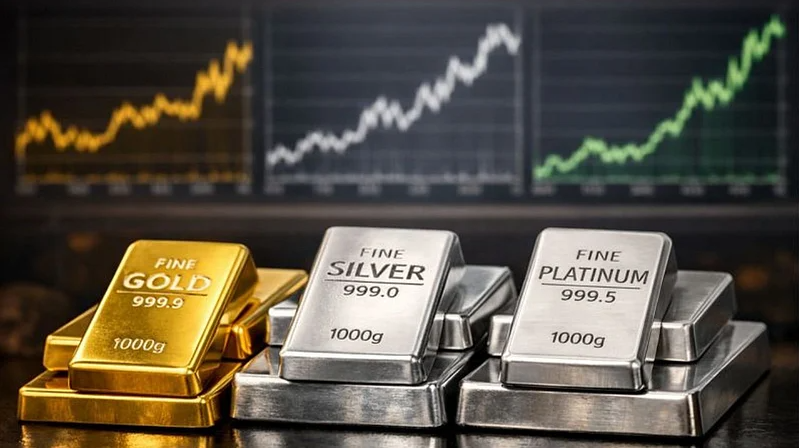
Key Factors That Influence Gold and Silver Spot Prices
Supply and Demand : Prices are likely to increase when demand for gold/silver rises, driven by investment, industrial use, or jewellery consumption. On the other hand, lower mining output or greater demand can push prices down.
Economic Conditions : Precious metal prices are subject to inflation, interest rates, employment, and GDP growth. In times of economic sluggishness or high inflation, gold and silver can serve as safe-haven investments.
Currency Strength : The trade in gold and silver is conducted in US dollars. With reduced dollar value, the precious metals tend to be cheaper to foreign consumers, which adds pressure according to demand, and the prices start rising. The opposite of this is usually true when the dollar is stronger.
Geopolitical Events : Extreme increase in the price of gold and silver is typical in the time of political instability, wars, trade wars, and uncertainty, the world is facing, as people seek to invest in a secure environment.
Market Sentiment and Speculation : Even in a scenario with no significant economic shifts, institutional investors, hedge funds, and large traders may trigger short-term price volatility by buying or selling in large quantities.
Why Tracking Spot Prices Matters for Investors
Smart Entry and Exit Decisions : The knowledge of the price trends may also make you aware when to buy at a good price and when to avoid when the prices are high and temporary.
Portfolio Diversification :Gold and silver tend to vary, unlike stocks and bonds. Price monitoring enables investors to rebalance their portfolios.
Inflation Protection : Precious metals have long-term value retention during the inflationary era, and therefore, monitoring the price is necessary to secure future patterns of wealth.
Market Awareness : Spot prices are not only a mirror of the health of the precious metals in the economy, but also the context in general and financial markets.
Best Ways to Track Gold and Silver Spot Prices
Financial News Platforms : Major financial news sites give live pricing on precious metals, market commentary, and analysis. These platforms come in handy when analyzing the price movements on a wider economic factor.
Precious Metals Prices Sites : Specialized precious metals exchanges focus on pricing gold and silver. They usually give historical charts, comparison applications, and investor-specific market insights.
Mobile Price-Tracking Apps : The mobile applications enable the investors to get price alerts immediately, track charts, and follow trends simultaneously. Notifications can be customized in many apps, depending on the price threshold.
Trading and Brokerage Services : The gold and silver trading platforms on the Internet provide high-end charting packages, technical indicators, and a real-time spot quote. They are instrumental for investors who tend to actively trade ETFs or futures.
Technical Indicators Helpful for Spot Price Analysis
Moving Averages : Moving averages eliminate price volatility and determine overall patterns of the market price. An average of 50 days, 100 days, and 200 days is also commonly used.
Relative Strength Index (RSI) : RSI is an indicator of momentum, and it shows whether gold or silver is overbought or oversold. A value greater than 70 is an indication of an overbought market, and a value that is smaller than 30 is an indication of an oversold market.
Bollinger Bands : Such bands are the pointer of price volatility and also aid in establishing a potential breakout or reversal in instances when the volatility is either unusually high or low.
MACD Indicator : The Moving Average Convergence Divergence (MACD) assists in the evaluation of the strength of the trend and variation in momentum of the spot price.
Final Thoughts
An essential skill that one must have to venture into the market of precious metals is tracking the spot price of the two metals, gold and silver. Having a sense of what drives prices, relying on effective tracking systems, and shunning the temptation of hasty judgment on the matter, investors can take the investment in gold and silver with a sense of assurance and rationality.